Buying a commercial plot is a decision that deserves more preparation than simply choosing a preferred size and paying a booking amount. A commercial property has to work from several perspectives at once. It should fit the intended business, offer practical customer access, have an appropriate configuration, remain financially manageable and satisfy the buyer's legal and technical due-diligence requirements.
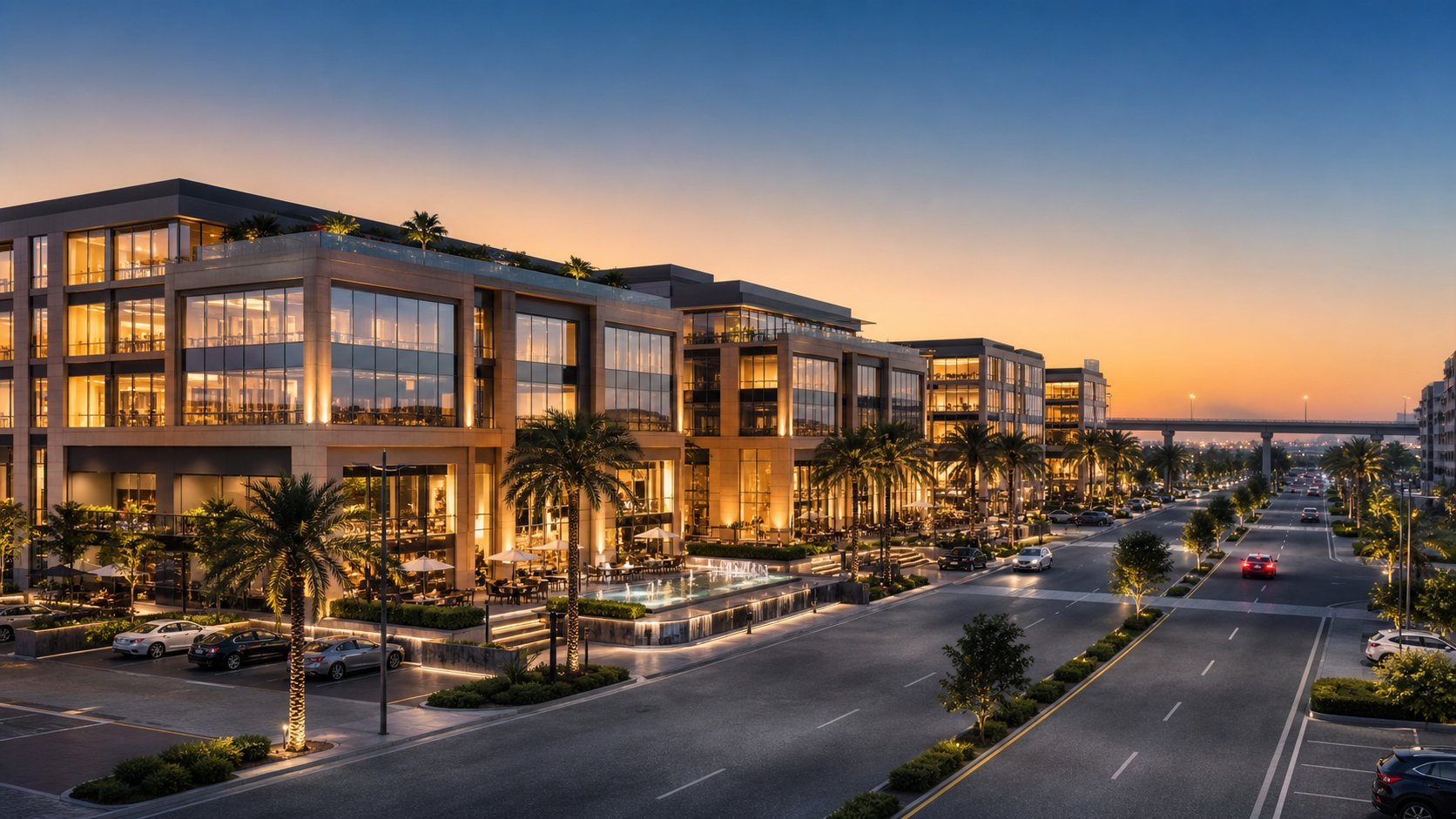
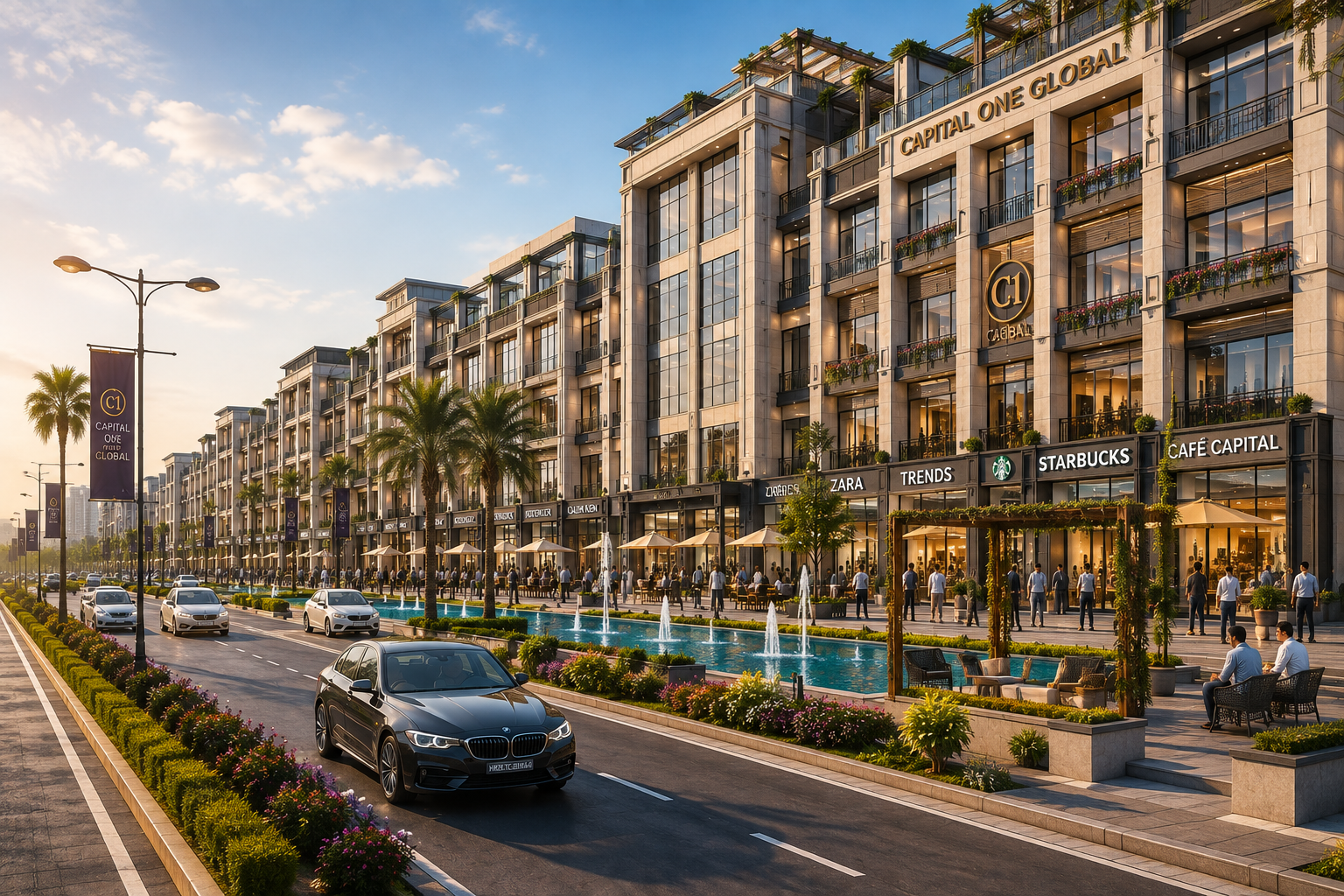
For buyers researching Capital One Global Property, the booking process should therefore begin with plot selection rather than payment. The development is presented on the Southern Peripheral Road in Sector 73 Gurgaon and is designed around a Sociozone concept that combines commercial, retail, office and lifestyle components. The project page describes approximately 7.4 acres, a detailed overview of 84 SCO plots, approximately 1.145 acres of water bodies and sit-out areas, and development comprising ground plus four upper floors.
The project source also identifies RERA registration number GGM/686/418/2023/30. Buyers should verify the current registration and project status against the latest official records before committing funds.
A good booking decision begins with a simple principle:
Do not reserve a plot until you understand exactly what you are buying, what it will cost and how you intend to use it.
Step One: Decide Why You Are Buying
The first question for a buyer considering Capital One Global Gurgaon Property should be the purpose of the purchase.
There are three common objectives.
Self-Use
You may intend to operate your own retail outlet, office, restaurant, clinic, consultancy or service business.
In this situation, business suitability should be the priority.
Investment
You may intend to construct and lease the property or hold it for future appreciation.
In this case, tenant demand, location, rental feasibility and exit liquidity become particularly important.
Hybrid Use
You may want to operate your business from part of the property while using other floors for supporting functions or future leasing, subject to permitted usage.
This approach can make an SCO format attractive because the project is designed around multi-level commercial use.
The purpose should be established before comparing plot sizes.
Step Two: Understand the Available Plot Configurations
The detailed project information lists five plot configurations:
| Plot Type | Approx. Area | Number Listed |
|---|---|---|
| Type A | 101 sq. yd. | 20 |
| Type B | 126 sq. yd. | 38 |
| Type C | 208 sq. yd. | 13 |
| Type D | 225 sq. yd. | 7 |
| Type E | 255 sq. yd. | 6 |
These figures come from the detailed project section of the reference page.
The source also contains different inventory references elsewhere on the same page, including references to 99 and 108 plots. This inconsistency means buyers should not rely on an old online figure when making a booking decision. The latest approved layout and current inventory statement should take priority.
The plot size should be matched to the intended commercial use.
A 101-square-yard plot may be suitable for a compact business.
A 126-square-yard plot can provide more flexibility.
A 208-square-yard plot may suit a larger retail or office concept.
A 225- or 255-square-yard plot may be more appropriate for businesses requiring a larger footprint.
But size should never be considered independently of location.
Step Three: Compare Plot Position, Not Just Area
When buyers see two plots at different prices, their first instinct is often to compare price per square yard.
That is only the beginning.
The actual comparison should include:
- Road frontage
- Corner location
- Visibility
- Number of open sides
- Access
- Proximity to entrance
- Parking
- Waterbody relationship
- Internal pedestrian movement
- Adjacent plot usage
- Signage potential
The project source describes access from 90-metre, 60-metre and 24-metre roads and highlights multiple entry and exit points. It also describes open-frontage and two-side-open characteristics.
A buyer should determine how those features apply to the exact plot being offered.
Step Four: Visit the Site Before Booking
A site visit should be treated as part of due diligence, not as a formality.
The buyer should physically inspect the development and selected plot before reserving it.
During the visit, examine the approach from the main road.
Check whether the project is easy to identify.
Look at traffic movement.
Inspect parking.
Walk through the internal areas.
Study the frontage.
Check nearby plots.
Understand where the waterbody and common areas are located.
Look at the likely customer movement.
A site visit can also reveal whether the actual environment matches the project presentation.
Step Five: Analyse the Road Connectivity
The location of Capital One Global Sector 73 SCO is one of the major considerations for buyers.
The project is positioned on Southern Peripheral Road and the reference page highlights access toward Golf Course Extension Road, Dwarka Expressway, Cyber City, NH-8 and other major destinations. It also lists connectivity information to locations such as IGI Airport and Rapid Metro.
For a business owner, the key question is not how many roads are nearby.
It is:
How easily can my customers and employees reach this property?
For an investor, another question matters:
Will this accessibility remain commercially relevant as the surrounding area develops?
These questions encourage a more realistic evaluation.
Step Six: Examine the Customer Catchment
A commercial plot needs customers.
The project page states that more than 55,000 families are located within a five-kilometre radius and identifies premium residential sectors and communities around the development. It also refers to nearby commercial occupiers and business hubs.
This can provide a useful starting point for market research.
However, a buyer should go further.
Determine the actual occupancy of surrounding residential communities.
Identify the age and income profile of residents.
Study existing retail demand.
Find out which businesses are already operating nearby.
Identify gaps in the local market.
This is particularly important when choosing a plot for self-use.
Step Seven: Decide What Type of Business Fits the Location
The project page describes potential uses across retail, food and beverage, professional services, healthcare, wellness, education, hospitality and mixed-use operations, subject to applicable permissions.
A buyer should narrow this down to a specific business concept.
For example:
Retail: frontage and visibility may dominate.
Restaurant: access, parking, visibility, service access and technical permissions may be critical.
Clinic: accessibility, privacy and customer convenience may be more important.
Office: employee access, parking and floor configuration may matter most.
Showroom: frontage, signage and road visibility may carry greater weight.
Once the business category is established, plot selection becomes easier.
Step Eight: Understand the Multi-Level Configuration
The detailed source describes ground plus four upper floors and presents the property as a shop-cum-office format.
This can create several planning possibilities.
A business may use the ground floor for customer interaction.
Upper floors can potentially be used for offices, additional retail, consultation rooms, storage or other approved commercial functions.
An investor can potentially construct a building designed for a particular tenant category.
However, buyers should verify the sanctioned plans, FAR, setbacks, height restrictions, basement provisions and permitted uses before incorporating these assumptions into a financial model.
Marketing descriptions should never replace approved technical documentation.
Step Nine: Review the Current Price Carefully
The reference page lists indicative pricing from approximately ₹6 crore onwards and provides different starting figures for the five detailed plot types. It also mentions an indicative per-square-yard rate of ₹6.50 lakh onwards plus applicable costs.
Because commercial prices can change and different plots can carry different premiums, buyers should request a current, dated quotation.
The buyer should not assume that the headline rate represents the final amount payable.
Ask whether the quotation includes:
- Basic plot cost
- PLC, if applicable
- Infrastructure charges
- Development charges
- Parking charges
- Maintenance deposits
- GST
- Stamp duty
- Registration
- Documentation
- Other statutory costs
A complete cost sheet is essential before booking.
Step Ten: Calculate the Total Investment
A commercial plot is only the first component of the investment.
The complete calculation should be:
Plot Acquisition + Statutory Charges + Construction + Financing + Interior/Fit-Out + Operating Setup = Total Capital Requirement
For an investor, this calculation should then be compared with expected rental income and potential resale value.
For an end-user, it should be compared with the cost of operating from rented premises.
This comparison can reveal whether buying is financially preferable to leasing.
Step Eleven: Examine the Payment Plan
The project reference describes several payment structures, including:
- 50:50
- Construction-linked payment plan
- 40:60
- 10:90
- 30:40:30
The detailed page also states a ₹10 lakh booking amount for the listed plans. These figures are project-source claims and should be confirmed against the current commercial offer before making payment.
A payment plan should be evaluated according to cash flow rather than convenience.
A low initial payment does not necessarily mean a cheaper purchase.
A deferred payment structure may create a large future obligation.
A construction-linked plan can align payments with milestones, but buyers should understand exactly what constitutes each milestone.
Always obtain the payment schedule in writing.
Step Twelve: Check Financing Requirements
The reference page states that financing support may be available through financial institutions and mentions commercial property loans of up to 70% of property value. Buyers should independently confirm current lender eligibility, loan-to-value ratios, interest rates, processing fees and applicable conditions because these vary by borrower and lender.
Before booking, calculate:
- Down payment
- Loan amount
- Interest cost
- Processing fees
- Monthly repayment
- Construction funding
- Working capital requirements
A commercial property should not place excessive pressure on the operating business.
Step Thirteen: Evaluate the Plot as an Investment
For investors examining Capital One Global SCO Plots Sector 73, the key question is whether the property can produce an acceptable risk-adjusted return.
The investor should estimate:
Rental Yield
Expected annual rent divided by total investment.
Capital Appreciation
Potential increase in property value over the holding period.
Vacancy
Expected periods without a tenant.
Maintenance
Recurring property and common-area costs.
Financing
Interest and related borrowing expenses.
Exit Liquidity
How easily the property could be sold if circumstances change.
The project source promotes rental and appreciation potential, but projected market returns should not be treated as guaranteed.
A conservative scenario should always be tested.
Step Fourteen: Compare the Plot Against Alternative Commercial Properties
Before reserving Capital One Global Commercial Property, compare it with competing commercial developments in the surrounding area.
The comparison should include:
- Location
- Plot size
- Price
- Frontage
- Construction potential
- Parking
- Customer catchment
- Development status
- Legal status
- Payment plan
- Rental demand
- Exit potential
This does not mean choosing the cheapest option.
A premium plot can be better value if its commercial characteristics justify the premium.
Conversely, an expensive location can be a poor investment if the price exceeds realistic business or rental potential.
Step Fifteen: Examine the Waterfront and Common Areas
The project reference highlights approximately 1.145 acres of water bodies and sit-out areas and presents the development as a waterfront retail experience.
This can add destination appeal.
But buyers should determine whether the chosen plot actually benefits from these features.
Ask:
Is the plot near the waterbody?
Is there direct visual exposure?
Can customers access the sit-out areas?
Are there restrictions around common areas?
What maintenance costs apply?
Are the facilities operational?
These details can materially affect the practical value of the property.
Step Sixteen: Understand the Sociozone Concept
The project is presented as a Sociozone rather than a conventional isolated commercial complex.
The concept is designed to combine commerce, culture and community within one environment. The project page describes food courts, dining spaces, recreational facilities, a clubhouse, entertainment areas, multi-brand retail, party/event spaces and café zones.
From a business perspective, this integrated environment can potentially encourage customers to spend more time within the destination.
From an investor's perspective, the tenant mix matters.
A strong combination of complementary businesses can create a better overall commercial ecosystem.
However, this depends on actual tenant occupancy and project execution.
Step Seventeen: Verify Infrastructure and Services
The project page identifies several infrastructure features, including power backup, water supply, fibre connectivity, CCTV surveillance, security personnel and fire-safety systems.
Before booking, ask which facilities are included in common infrastructure and which services may involve additional charges.
Also confirm:
- Power-backup capacity
- Water supply arrangements
- Internet service availability
- Fire-safety systems
- Security arrangements
- Waste management
- Maintenance responsibilities
Commercial operations depend heavily on reliable infrastructure.
Step Eighteen: Conduct Legal Due Diligence
Before paying the booking amount, review the relevant documents.
The buyer should verify:
- RERA registration
- Title documentation
- Approved layout
- Sanctioned building plans
- Land-use permissions
- Commercial usage
- Development rights
- Construction restrictions
- Payment agreement
- Possession terms
- Transfer provisions
- Maintenance obligations
- Cancellation conditions
The project source identifies RERA registration GGM/686/418/2023/30. This should be checked through the current official RERA records before purchase.
Legal verification should be performed by a qualified property lawyer where appropriate.
Step Nineteen: Verify the Exact Plot Number
Never book based only on a verbal description such as “corner plot” or “main-road-facing plot.”
Ask for the exact plot number.
Then locate it on the approved layout.
Check:
- Shape
- Dimensions
- Road side
- Opening
- Adjacent plots
- Common areas
- Parking relationship
- Access
This is particularly important because plot-level characteristics can influence commercial value significantly.
Step Twenty: Understand the Booking Amount
A booking amount should only be paid after the buyer understands the terms attached to it.
Ask:
Is it refundable?
Under what circumstances?
What documentation accompanies the booking?
When is the agreement signed?
When does the booking become binding?
What happens if financing is not approved?
What happens if the buyer cancels?
What happens if the seller cannot deliver according to the agreement?
The project source refers to a ₹10 lakh refundable booking fee within its payment-plan descriptions, but the exact current booking terms should be confirmed in the latest written offer.
Step Twenty-One: Do Not Choose a Plot Only Because It Is Available
Availability does not automatically mean suitability.
Suppose three plots are available:
- One is cheaper but internally located.
- One has better frontage but costs more.
- One is larger but requires significantly more construction capital.
The right choice depends on the buyer's objective.
An investor may favour the plot with stronger leasing characteristics.
A retailer may favour frontage.
An office user may favour access and parking.
A budget-conscious buyer may prefer a smaller configuration.
The booking decision should therefore follow the business strategy, not the other way around.
Step Twenty-Two: Create a Plot Comparison Sheet
Before reserving a Capital One Global 73 SCO Plots option, prepare a simple comparison.
| Criteria | Plot 1 | Plot 2 | Plot 3 |
|---|---|---|---|
| Area | Verify | Verify | Verify |
| Price | Verify | Verify | Verify |
| Frontage | Verify | Verify | Verify |
| Corner | Yes/No | Yes/No | Yes/No |
| Open sides | Verify | Verify | Verify |
| Road access | Verify | Verify | Verify |
| Visibility | High/Medium/Low | High/Medium/Low | High/Medium/Low |
| Parking | Verify | Verify | Verify |
| Waterbody proximity | Verify | Verify | Verify |
| Business suitability | Assess | Assess | Assess |
| Total investment | Calculate | Calculate | Calculate |
| Expected rent | Estimate | Estimate | Estimate |
This makes the decision more objective.
Step Twenty-Three: Think About Future Exit
Even if the intention is to hold the property indefinitely, an exit strategy should exist.
Circumstances can change.
The business may relocate.
Capital may be needed elsewhere.
The investor may want to diversify.
A future buyer will examine the same characteristics that you should examine today:
- Location
- Plot size
- Frontage
- Accessibility
- Building quality
- Tenant profile
- Commercial demand
- Legal documentation
Therefore, buying a commercially usable plot can potentially improve future marketability.
Step Twenty-Four: Understand the Difference Between Project and Plot Value
A strong development does not mean every plot has identical value.
The project creates the overall environment.
The individual plot determines the exact commercial position.
This distinction is critical for Capital One Global SCO Property buyers.
The project may have strong road connectivity, but a particular plot may have weaker visibility.
The project may have a waterfront, but a particular plot may be farther from it.
The project may offer parking, but a particular location may be less convenient for customer access.
Therefore, project-level research should always be followed by plot-level research.
Step Twenty-Five: Complete the Site Visit Before Final Confirmation
The site visit should be the final reality check before booking.
During the visit, verify that the information supplied to you corresponds with what you see.
Check the approach road.
Check the development entrance.
Check the proposed plot.
Check frontage.
Check nearby construction.
Check parking.
Check surrounding residential and commercial development.
Observe traffic.
If possible, visit more than once.
A weekday visit can reveal business traffic.
An evening visit can reveal retail and restaurant movement.
A weekend visit can show residential customer activity.
A Simple Booking Decision Framework
A buyer can use five stages.
Stage 1 — Business Fit
Does the property suit the intended business?
Stage 2 — Location Fit
Can customers and employees reach it conveniently?
Stage 3 — Plot Fit
Does the exact plot provide the necessary frontage, access and size?
Stage 4 — Financial Fit
Can the buyer comfortably manage the total acquisition and construction cost?
Stage 5 — Legal Fit
Have all documents and permissions been verified?
Only when all five stages are satisfactory should the booking proceed.
Who May Benefit From This Commercial Format?
The project's shop-cum-office configuration may be relevant to a range of users, subject to permitted uses.
Retailers may use the property for customer-facing outlets.
Professional firms may use it for offices and consultations.
Restaurants and cafés may seek destination-oriented locations.
Healthcare operators may require accessible commercial premises.
Education and training businesses may need multi-level space.
Investors may consider leasing opportunities.
The suitability depends on the exact business model and approvals.
Common Booking Mistakes to Avoid
Choosing on Price Alone
The cheapest plot is not necessarily the best commercial investment.
Ignoring Frontage
A poor frontage can affect customer visibility.
Assuming Every Plot Is Identical
Location within the development matters.
Relying on Old Inventory
Availability changes.
Ignoring Total Cost
The plot price is only one component of the investment.
Skipping Legal Verification
Commercial property requires documentation review.
Assuming Returns Are Guaranteed
Rental and appreciation projections are not guarantees.
Booking Before a Site Visit
Online information cannot replace physical inspection.
Final Booking Checklist
Before reserving your Capital One Global Sector 73 Gurgaon plot, confirm:
- Exact plot number
- Plot area
- Plot dimensions
- Frontage
- Number of open sides
- Corner status
- Road access
- Parking
- Current price
- Applicable charges
- Payment plan
- Booking amount
- Refund terms
- Construction provisions
- Permitted use
- RERA status
- Approved layout
- Sanctioned plans
- Maintenance terms
- Possession terms
- Transfer provisions
- Cancellation conditions
Keep copies of all documents and written communications.
Capital One Global 73 Gurgaon is positioned as a commercial development designed around SCO plots, a multi-level shop-cum-office format and a Sociozone environment along Southern Peripheral Road in Sector 73. The project reference highlights multiple road accesses, a waterfront-oriented commercial setting, varied plot sizes, parking, infrastructure and lifestyle-oriented common facilities.
For buyers, however, the most important part of the booking process is not the project name.
It is selecting the right plot.
A 101-square-yard plot may be ideal for one business and inadequate for another. A corner plot may justify a premium for a retailer but not necessarily for an office user. A larger plot may create greater development potential while also requiring substantially more capital.
The most effective strategy is therefore to work backwards from the intended business or investment objective.
First determine what the property needs to achieve.
Then identify the required size and configuration.
After that, compare available plots according to frontage, access, visibility, parking and location.
Next, calculate the complete acquisition and construction cost.
Finally, verify legal and technical documentation before paying the booking amount.
The supplied source contains conflicting inventory references, with the detailed project overview describing 84 plots while other sections mention 99 and 108 plots. Buyers should therefore obtain the latest official inventory and approved layout rather than relying on any single online figure.
A well-considered booking decision is not about moving fastest. It is about having enough information to know exactly why a particular plot deserves to be reserved.
Once the plot, documentation, financial structure and intended business use all align, the buyer can move forward with a much stronger foundation.