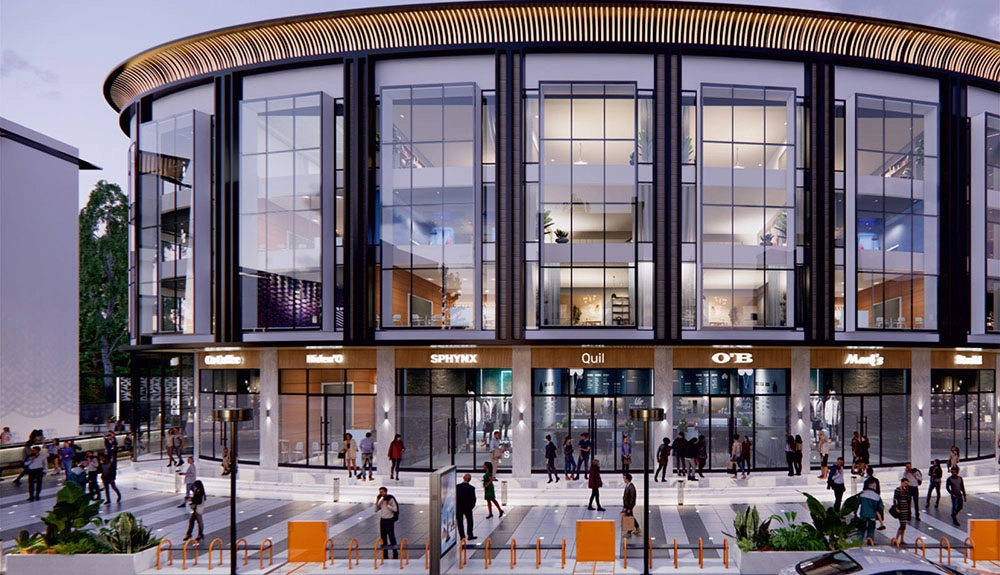
Introduction
Shop-Cum-Office (SCO) plots have become one of the most talked-about commercial real estate formats in Gurugram over the past few years. For business owners, retailers, and investors researching this asset class, the terminology, regulatory framework, and evaluation criteria can be confusing. This guide explains what SCO plots are, how Haryana's RERA framework applies to them, how plot sizes and pricing typically work, which corridors host most SCO development, and what buyers should verify before committing capital — including where a specific development like DLF Central 67 in Sector 67 fits into this broader category.
Quick Answer
An SCO (Shop-Cum-Office) plot is a freehold commercial plot in a government-approved plotted colony in Haryana, typically permitting a retail unit on the lower floor(s) and office or showroom space above, within limits set by the license and building byelaws. SCO colonies are registered as "Commercial Plotted Colony" projects with the Haryana Real Estate Regulatory Authority (HARERA), Gurugram, and are concentrated along corridors such as Golf Course Extension Road, Southern Peripheral Road (SPR), Sohna Road, Dwarka Expressway, and New Gurugram sectors. Pricing and exact permissible construction vary by license, sector, and developer, so current figures should always be verified from the project's official HARERA registration and the developer directly.
What Is an SCO Plot?
SCO stands for Shop-Cum-Office. It is a category of commercial plot recognised under Haryana's town-planning and licensing framework, under which the state's Department of Town and Country Planning (DTCP) grants a license for a "Commercial Plotted Colony." Within such a colony, individual plots are sold to buyers who then construct their own building — usually within specified floor limits — rather than buying a ready-built shop or office unit from the developer.
This ownership model differs from a conventional mall or IT park in one key respect: the buyer owns the land and has development rights over it, subject to the approved building plan, rather than owning only a constructed unit within someone else's structure. In practice, most SCO plots are used for a mix of:
- Ground-floor retail (showrooms, cafés, salons, clinics, or branded stores)
- Upper-floor offices, coaching centres, service businesses, or additional retail
The precise mix of permitted uses, number of floors, and floor area ratio (FAR) depends on the license conditions for that specific project and the applicable Haryana building byelaws — these details vary from one project to another and should be confirmed from the project's own approved zoning and building plans rather than assumed.
SCO Plots vs Other Commercial Formats in Gurugram
| Feature | SCO Plot | Strata-Sold Office/Retail Unit | Commercial Complex/Mall Unit |
|---|---|---|---|
| Ownership | Freehold plot; buyer builds | Ownership of a constructed unit | Ownership/lease of a unit in a shared building |
| Construction control | Buyer controls design within approved plan | Developer-built, fixed layout | Developer-built, fixed layout |
| Typical use | Retail + office/showroom | Office, retail, or mixed | Retail, F&B, entertainment |
| Common areas/maintenance | Colony-level common areas maintained per license conditions | Building-level maintenance | Mall/complex-level maintenance, often higher CAM |
| Development timeline | Buyer-dependent (plot to construction) | Usually ready or under construction by developer | Usually ready or under construction by developer |
| Regulatory registration | Registered as "Commercial Plotted Colony" with HARERA | Registered as a real estate project with HARERA | Registered as a real estate project with HARERA |
This comparison is directional; the specific terms of any project — including construction timelines, maintenance charges, and permitted use — are governed by that project's license and should be verified against its official documentation.
Why Gurugram Has Become a Hub for SCO Development
Gurugram's growth as a corporate and retail destination, alongside its highway network (NH-48, Golf Course Road, Golf Course Extension Road, Southern Peripheral Road, Sohna Road, and Dwarka Expressway), has made it attractive for plotted commercial development. Golf Course Extension Road, for instance, was originally built to connect Golf Course Road to Sohna Road and now links further to NH-48 near Sector 74A, and this corridor — along with SPR — has seen substantial residential and commercial construction over the past decade.
Because SCO colonies are typically located along or near these arterial roads, they benefit from vehicular visibility and access to catchment populations in surrounding residential sectors, corporate parks, and institutional developments. The extent of this benefit for any individual plot depends heavily on its specific location within the colony (corner plot vs interior plot, road-facing vs internal), footfall patterns in that micro-market, and how built-out the surrounding area is — factors that require site-specific evaluation rather than generalisation from the broader corridor's reputation.
Understanding Plot Sizes and Unit Conversions
SCO plot sizes are generally quoted in square yards or square metres, depending on the developer and project documentation. Because listings sometimes mix units, it helps to know standard conversions:
| Unit | Equivalent |
|---|---|
| 1 square metre | ≈ 10.7639 square feet |
| 1 square metre | ≈ 1.19599 square yards |
| 1 square yard | 9 square feet |
Plot sizes across different SCO projects in Gurugram vary considerably — some colonies offer smaller plots suited to single-shop formats, while others offer larger corner or double plots suited to showrooms or multi-tenant buildings. There is no single "standard" SCO plot size across the market, and any specific dimension for a specific project (including DLF Central 67 in Sector 67) should be confirmed from that project's official layout plan rather than assumed from general market figures.
What Affects SCO Plot Pricing
Pricing for SCO plots is influenced by several factors, and current rates should always be checked against the developer's official price list or a licensed broker, since figures change with market conditions and are typically project- and phase-specific:
- Location within the colony — corner plots, plots facing the internal plaza or main road, and plots near the entrance typically command a premium over interior plots.
- Micro-market maturity — sectors with established residential and corporate density (e.g., along Golf Course Extension Road or SPR) often see different pricing dynamics than newly licensed sectors further out.
- Developer track record — pricing frequently reflects the developer's execution history, brand, and the design/amenity level of the colony (internal plaza, landscaping, parking provision).
- Permissible construction (FAR and floors) — plots that permit more built-up area for a given plot size can affect per-square-yard economics.
- Market cycle and demand — like all real estate, SCO pricing responds to broader demand-supply conditions in Gurugram's commercial segment.
- Payment plan structure — construction-linked plans, down-payment plans, and possession-linked plans can result in different effective costs.
Because pricing is dynamic and project-specific, this guide does not quote current per-square-yard rates; buyers should request the latest official price list and payment plan directly from the developer or an authorised channel partner and confirm the date of any quoted figure.
SCO Plots and HARERA Registration
Commercial plotted colonies, including SCO developments, are registered with the Haryana Real Estate Regulatory Authority (HARERA), Gurugram, under Section 4 or Section 7(3) of the Real Estate (Regulation and Development) Act, 2016, once the promoter holds a valid DTCP license for the colony. A HARERA registration certificate typically discloses:
- The project name and exact sector/location
- The DTCP license number and its validity period
- Total licensed area and the area registered for that phase
- The nature of the project (recorded as "Commercial Plotted Colony (SCO)")
- The number of blocks/units and total FAR area
- Promoter and, where applicable, collaborator details
Registration status, validity dates, and the specific license number are project-specific and change over time (registrations are periodically extended or renewed). Buyers should look up the project by name on the official HARERA Gurugram portal and cross-check the registration number, license validity, and promoter name before relying on any secondary source, including this article or a project's marketing material.
Business Suitability: What Kind of Businesses Use SCO Plots
SCO formats generally suit businesses that benefit from independent street-facing visibility combined with additional floor space for back-office, storage, or service delivery. Commonly cited uses across SCO developments in Gurugram include:
- Retail showrooms and branded stores
- Restaurants, cafés, and quick-service food outlets
- Clinics, diagnostic centres, and wellness/salon businesses
- Coaching centres and educational service providers
- Bank branches, insurance, and financial services offices
- Corporate or professional services offices above ground-floor retail
Whether a specific business format is permitted on a specific plot depends on the zoning classification and use restrictions in that colony's license and building byelaws, and on any signage, façade, or usage restrictions the developer's association may apply. This should be confirmed before finalising a business plan for a particular unit.
Location Snapshot: Sector 67 and the Golf Course Extension Road–SPR Corridor
Sector 67 sits within the broader Golf Course Extension Road–Southern Peripheral Road (SPR) corridor of Gurugram, an area that has seen substantial residential and commercial development over the past decade. The corridor connects toward NH-48 and provides access to established business districts such as Cyber City, as well as residential catchments along Golf Course Extension Road and Sohna Road.
DLF Central 67 is one SCO plotted development positioned in this Sector 67 commercial belt on the Sohna–Gurgaon Road stretch. Publicly available project information describes a development with basement plus ground plus four floors of permissible construction and cites approximate road distances of around 8 km to Rajiv Chowk, 17 km to DLF Cyberhub, 16 km to Sohna, and 26 km to IGI Airport. These figures come from the project's own promotional material; buyers should treat them as approximate and independently verify current distances, travel times, and connectivity claims — including any metro or road-widening plans — before factoring them into an investment decision, since infrastructure timelines are subject to change.
Beyond DLF Central 67, several other developers have licensed SCO colonies across Gurugram's growth corridors — including sectors along Dwarka Expressway, Sohna Road, and further stretches of SPR — so buyers researching DLF Central Sector 67 Gurgaon should also compare it against other options in similar micro-markets rather than evaluating it in isolation.
Comparison Factors When Evaluating SCO Options
When comparing multiple SCO plots or colonies — whether within Sector 67 or across different corridors — consider evaluating each on the same set of factors:
| Factor | What to Check |
|---|---|
| Location within colony | Corner/road-facing vs interior plot |
| Corridor maturity | Existing residential/corporate density nearby |
| License & RERA status | Valid DTCP license, current HARERA registration |
| Permitted use | Zoning classification, allowed business types |
| Construction potential | Approved floors, FAR, basement provision |
| Common infrastructure | Plaza, parking, landscaping, road widths |
| Developer track record | Delivery history in other projects |
| Payment plan | Construction-linked vs lump sum, associated costs |
| Connectivity | Access to arterial roads, public transport proximity |
| Competing supply | Number of similar SCO colonies nearby |
Investment Analysis: Factors to Weigh
SCO plots are frequently marketed around themes of ownership flexibility, potential rental income from multiple floors, and long-term appreciation. These are genuine structural features of the format, but outcomes for any individual plot depend on factors that require case-by-case evaluation rather than a blanket assumption of profitability.
Demand and footfall potential. A plot's commercial viability depends on the density and spending power of the surrounding catchment, competing retail supply, and how developed the immediate neighbourhood already is. Newly licensed colonies may take time to build up footfall as surrounding sectors develop.
Construction and holding costs. Unlike a ready-built unit, an SCO plot typically requires the buyer to fund construction after purchase (unless a built-to-suit or shell option is offered), which adds to the total capital outlay and timeline before the asset can generate rental income or be occupied for business use.
Liquidity and exit considerations. Commercial plots, especially those requiring the buyer to complete construction, may have different resale liquidity characteristics than ready-to-move retail units. Exit timing can depend on how developed the colony and surrounding sectors are by the time a sale is contemplated.
Rental potential. Multi-floor SCO plots are often positioned as offering the possibility of separate ground-floor retail and upper-floor office leasing. Actual achievable rents depend on local market rates at the time of leasing, tenant demand for that specific location, and the quality of construction — none of which can be guaranteed at the time of plot purchase.
Financing considerations. Loan-to-value ratios, interest rates, and eligibility for commercial plot financing (as distinct from financing a ready-built unit) vary by lender and should be confirmed with banks/NBFCs, since not all lenders finance land purchase and construction on the same terms.
Regulatory and market risk. Changes in DTCP policy, delays in license renewal, infrastructure project timelines (roads, metro extensions), and broader commercial real estate demand cycles can all affect both the development timeline and the eventual value of the asset.
No return, appreciation percentage, or rental yield should be assumed for any SCO plot, including DLF Central 67 SCO Plots, without independent, current, project-specific verification. Marketing projections are not guarantees.
Common Mistakes Buyers Make
- Assuming all SCO plots in a corridor carry the same price, size, or construction potential without checking the specific project's license.
- Relying on distance or connectivity claims from marketing material without verifying current road/metro status.
- Not confirming HARERA registration validity dates before making payments.
- Underestimating post-purchase construction costs and timelines.
- Comparing gross plot price without accounting for construction cost per floor.
- Assuming rental income will begin immediately after plot possession, without factoring in construction time.
Buyer Due-Diligence Checklist
Before purchasing any SCO plot, buyers should verify the following, ideally with the assistance of a property lawyer and, where relevant, a chartered accountant:
- Title and ownership documents — chain of title, encumbrance status, and the seller's/developer's legal right to sell.
- DTCP license — license number, validity, and whether it covers the specific plot being purchased.
- HARERA registration — current registration certificate on the official HARERA Gurugram portal, including validity date and any extensions.
- Approved layout and zoning plan — matches what is being sold; confirms plot dimensions and permitted use.
- Building byelaws and FAR — confirm permissible floors, basement rights, and setback requirements.
- Development status — whether internal roads, sewage, water, and electricity infrastructure are complete or pending.
- Payment plan and cost break-up — total cost including EDC/IDC, GST, stamp duty, registration charges, and any maintenance deposit.
- Parking and access provisions — allocated parking and access road width for the specific plot.
- Association/maintenance framework — who maintains common areas post-handover and associated charges.
- Financing pre-approval — confirm which lenders finance the specific project and plot type.
- Taxation — applicable GST on plot purchase/construction and stamp duty rates, which can change and should be confirmed at the time of transaction.
- Liquidity/exit route — resale demand precedent in the same colony or nearby comparable colonies, if available.
Professional legal, financial, and tax verification is strongly recommended before signing any agreement or making payment.
Frequently Asked Questions About Sector 67 and SCO Investment
Buyers researching this micro-market often want the location context spelled out plainly before going further into project-specific details.
Sector 67 lies along the Golf Course Extension Road–SPR growth corridor of Gurugram, an area that has attracted both residential and commercial plotted development due to its road connectivity toward NH-48 and proximity to established business districts. Its relevance for commercial property stems from the surrounding density of residential sectors and corporate occupiers, though the extent of any specific project's catchment and footfall should be assessed independently rather than assumed purely from the corridor's general reputation.
HARERA Gurugram Portal
SCO plots represent a distinct commercial real estate format in Gurugram — freehold plots within DTCP-licensed and HARERA-registered plotted colonies, generally supporting a mix of retail and office use across permitted floors. Sector 67, positioned within the Golf Course Extension Road–SPR corridor, hosts developments such as DLF Central Sector 67 Gurgaon within this broader category. Evaluating any SCO plot — in Sector 67 or elsewhere — requires looking closely at location within the colony, license and RERA status, permitted construction, developer track record, and realistic assumptions about construction costs, timelines, and rental potential, rather than relying on general corridor reputation or marketing claims alone. Because pricing, plot sizes, RERA registration status, and infrastructure timelines all change, readers should verify current details directly from official sources — the HARERA Gurugram portal, the DTCP license, and the developer — before making any purchase decision.
Investment Disclaimer
This article is for general informational purposes only and does not constitute investment, legal, financial, or tax advice. Real estate prices, plot sizes, RERA registration status, licensing details, connectivity, and infrastructure timelines are subject to change and should be independently verified from official sources — including the Haryana RERA (HARERA) Gurugram portal, the relevant DTCP license, and the developer — before making any purchase or investment decision. No guarantee of returns, rental income, capital appreciation, or resale value is made or implied. Readers are strongly advised to consult a qualified property lawyer, chartered accountant, and/or registered financial advisor before transacting.
FAQs
1. What is an SCO plot?
An SCO (Shop-Cum-Office) plot is a freehold commercial plot within a DTCP-licensed plotted colony in Haryana, generally permitting retail use on the lower floor(s) and office or additional retail use above, subject to the project's approved building plan and byelaws.
2. How is an SCO plot different from a regular commercial shop?
Unlike a ready-built shop bought from a developer, an SCO plot gives the buyer land ownership and development rights, meaning the buyer typically constructs the building within approved limits, rather than purchasing an already-built unit.
3. Are SCO plots in Gurugram RERA-registered?
Commercial plotted colonies, including SCO developments, are required to be registered with HARERA Gurugram once the promoter holds a valid DTCP license. Buyers should confirm the specific registration number and validity for any project on the official HARERA portal.
4. What is the significance of Sector 67 for commercial property buyers?
Sector 67 falls within Gurugram's Golf Course Extension Road–SPR growth corridor, which has seen substantial residential and commercial development, giving commercial plots in the sector access to nearby residential and corporate catchments — though specific footfall and demand should be assessed for each project individually.
5. What factors determine SCO plot pricing?
Pricing depends on the plot's position within the colony (corner vs interior), the maturity of the surrounding micro-market, the developer's track record, permissible floor area, market conditions, and the payment plan offered — all of which vary by project and should be checked against the current official price list.
6. Do SCO plot sizes follow a standard format across Gurugram?
No. Plot sizes vary significantly between projects and are set out in each colony's approved layout plan. Buyers should confirm exact dimensions for any specific plot rather than assuming a standard size across the market.
7. What should buyers verify before purchasing an SCO property?
Key checks include title documents, DTCP license validity, current HARERA registration, approved zoning and building plan, development status of colony infrastructure, full payment break-up, and financing availability — ideally with legal and financial professional support.
8. Can SCO plots be used for any type of business?
Permitted use depends on the zoning classification and use restrictions specified in that colony's license and building byelaws. Buyers should confirm permitted business categories for a specific plot before finalising a business plan.
9. Is rental income guaranteed from an SCO plot investment?
No. Rental income depends on construction being completed, local leasing demand at that time, and prevailing market rates — none of which can be guaranteed at the point of plot purchase. Marketing projections should not be treated as assured returns.
10. What financing options are available for SCO plot purchases?
Financing terms for commercial plot purchase and construction vary by bank/NBFC, and not all lenders offer the same loan-to-value ratios or eligibility criteria as they would for a ready-built unit. Buyers should confirm current financing options directly with lenders for the specific project.