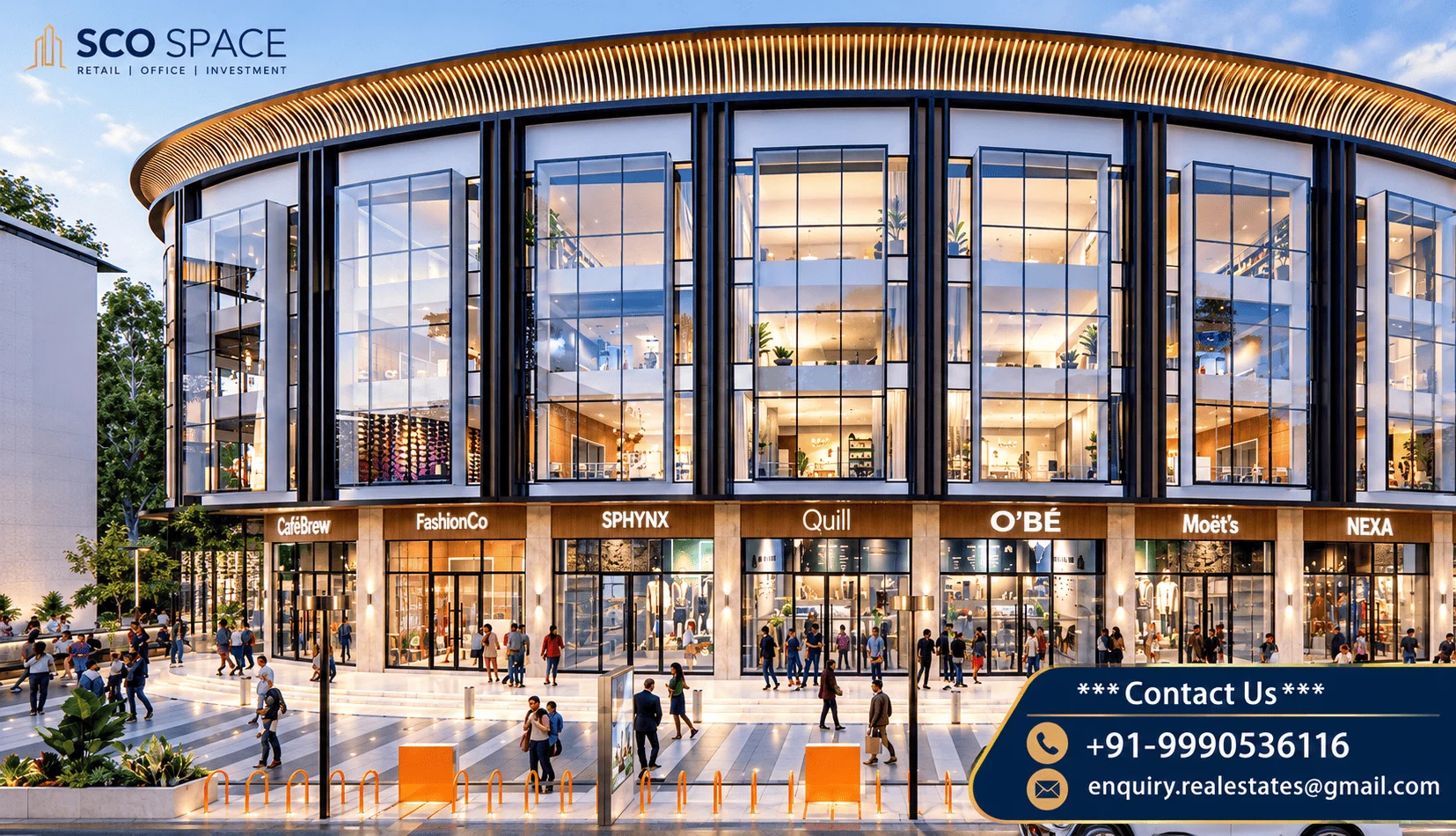
SCO Plots Gurgaon Understanding Retail Visibility and Office Potential
Understanding the Topic
SCO plots in Gurgaon are “Shop Cum Office” commercial plots, usually planned for ground-floor retail with offices on the floors above. Gurgaon’s mix of corporate employers, dense residential sectors and expanding corridors has made commercial property here a regular topic for business owners and investors across Delhi NCR. But a plot’s value to a retailer or an office user depends on factors that brochures rarely explain: visibility, access, catchment, permitted use and exit options. This guide covers how SCO plots work, how to judge retail and office suitability, how Gurgaon’s growth corridors compare, and what to verify before committing capital.
Key Takeaways - Are SCO Plots in Gurgaon Suitable for Retail and Office Use?
SCO plots in Gurgaon can suit both retail and office use, because the format generally pairs street-facing shop space with upper-floor offices. Suitability depends on frontage, road access, parking, local catchment and the permitted uses in the approved plans. Each plot should be checked independently against official documents.
At a glance:
- Retail strength: frontage, footfall and ease of access.
- Office strength: floor plates that suit small and mid-sized teams, plus accessibility for staff and clients.
- Main risks: vacancy, competition, regulatory limits and slow resale.
- Core rule: verify title, approvals and permitted use before paying any money.
What Are SCO Plots and How Do They Work in Gurgaon?
What are SCO plots in Gurgaon? SCO stands for Shop Cum Office. An SCO plot is a commercial plot where the owner may construct a building combining shops, usually on the lower floors, with office space above, subject to the applicable zoning, licence conditions and building rules. The plot is the unit of ownership, and the owner or buyer builds or sells floors within what the approvals allow.
This differs from a typical mall unit or a standalone office floor in a business park. Three features set the SCO format apart:
- Plot-based ownership. You deal with a defined piece of land and its building rights, not a single shop inside a larger complex.
- Street-facing design. SCO plots are typically planned along roads or internal commercial belts, so frontage and access matter more than in an enclosed mall.
- Mixed use within one structure. Retail on lower levels and office on upper levels can share one address and one set of approvals.
In Haryana, commercial land use is governed by state town planning rules and licence conditions, and the details differ between plots, sectors and colonies. Coverage, floor area ratio, height, setbacks, parking norms and permitted activities are set by the applicable approvals, not by general market practice. Anyone researching SCO plots Gurgaon should treat the sanctioned plan and licence terms for that specific plot as the authority on what can be built and how it can be used.
Why the Format Appeals to Different Buyers
Business owners may value the control of owning a building with their own signage and entrance. Investors may be drawn to a format that can generate rental income from retail and office tenants in one structure. Neither benefit is guaranteed, and both depend on location and execution.
Why Gurgaon’s Commercial Growth Corridors Matter
Commercial property performs differently depending on where it sits, so the corridor matters at least as much as the plot. Several corridors are frequently discussed by buyers researching Gurgaon commercial property:
- Southern Peripheral Road (SPR): a major east-west connector linking several established and developing sectors, often discussed for its connectivity role.
- Golf Course Extension Road: a prominent corridor lined with residential and commercial development and known as a business address.
- Dwarka Expressway and the New Gurgaon belt: a newer growth area where residential and commercial development has been expanding, with infrastructure and occupancy still maturing in places.
- Sector 67 and surrounding sectors: an area that sits within the wider southern Gurgaon commercial conversation and draws interest from buyers comparing locations along and near the corridors above.
The relationships between these corridors are not uniform. Some areas are mature with established customer bases, and others are still building their residential population. Any statement about distances, travel times, completion dates or planned infrastructure should be confirmed with official sources such as the relevant development authorities, as timelines can shift.
Retail Visibility: What Makes an SCO Plot Work for Shops
Visibility alone doesn’t make a retail location. A shopfront can be seen by thousands of passing vehicles and still sell little if customers can’t or won’t stop. Retail suitability depends on how well visibility, access and demand fit together.
Core Retail Factors
Frontage and signage. Wider frontage generally gives a business more display and signage space, but the permitted signage and display rules for the location still apply.
Road access and approach. Customers need to reach the store easily. Consider how traffic flows, whether there is a convenient approach from both directions, and whether turning in is practical.
Parking. A common reason retail locations underperform is a lack of convenient customer parking. Check what parking is provided, what the approvals require and how it will work in practice at peak hours.
Catchment composition. The people nearby determine what will sell. A residential catchment tends to support daily-needs, food and services, while a corporate catchment may support quick-service food, convenience and professional services. Which format suits a plot depends on who actually lives and works nearby.
Competition and category fit. A busy road with existing similar businesses can signal demand, or it can signal saturation. The right answer depends on the category.
Which Businesses Are Commonly Considered?
Categories often considered for ground-floor SCO space include food and beverage, pharmacies and clinics, banking and financial services, salons, convenience retail, electronics and showrooms. Fit varies by catchment, and the permitted use under the approvals must allow the intended activity.
Retail Suitability Checklist
| Factor | Question to ask | Why it matters |
|---|---|---|
| Frontage | How much street-facing width is available? | Affects display, signage and visibility |
| Access | Can customers enter and exit easily? | Drives conversion of passers-by |
| Parking | What parking is approved and practical? | Influences customer willingness to visit |
| Catchment | Who lives and works within reach? | Determines which categories can succeed |
| Competition | Which similar businesses are nearby? | Signals demand or saturation |
| Permitted use | Is the intended activity allowed? | Avoids regulatory and operating issues |
Office Potential: Using the Upper Floors of an SCO Plot
The upper floors of an SCO building are generally planned for office use. That can suit businesses that don’t need a large corporate campus but want a visible, accessible address.
Who Typically Uses SCO Office Space
Small and mid-sized professional teams are the most common users: consultancies, accounting and legal practices, design studios, agencies, medical and diagnostic practices, and regional offices. These occupiers often value easy client access and a road-facing address more than the amenities of a large business park.
Office-Specific Considerations
- Floor plate and layout. Whether the layout supports partitioning and efficient use depends on the building design, which may be constrained by the plot size and approved plans.
- Lifts, stairs and accessibility. Multi-floor buildings need to work for staff and visitors, including people with mobility needs.
- Parking for staff and clients. Office occupancy increases daytime parking demand, so this should be checked alongside retail needs.
- Power backup and services. Operating costs depend on what services the building provides.
- Staff commute. Employers often weigh how easily employees can reach the location, so connectivity matters.
Retail vs Office: A Comparison
| Aspect | Retail (lower floors) | Office (upper floors) |
|---|---|---|
| Visibility need | High | Moderate |
| Parking dependence | High and short-term | Steady through the working day |
| Tenant profile | Shops, services, F&B | Professional and small-to-mid teams |
| Demand driver | Footfall and catchment | Business activity and commuting convenience |
| Typical risk | Weak footfall or saturation | Vacancy and tenant turnover |
Mixed-use buildings carry the risks of both uses, but they can also spread income across tenant types. Which effect dominates depends on the specific building and market.
Plot Sizes, Unit Conversions and Configuration
Plot sizes are quoted in different units depending on the source. Government records, developers and brokers may use square metres, square feet or square yards. Reading these correctly avoids mistakes when comparing options.
Conversions used in this guide:
- 1 sq. m. ≈ 10.7639 sq. ft.
- 1 sq. m. ≈ 1.19599 sq. yd.
The table below shows arithmetic examples only. The sizes are illustrative and do not describe any actual plot.
| Area (sq. m.) | Approx. sq. ft. | Approx. sq. yd. |
|---|---|---|
| 100 | 1,076.39 | 119.60 |
| 200 | 2,152.78 | 239.20 |
| 300 | 3,229.17 | 358.80 |
Always confirm the actual size of any plot from the official documents, and confirm what the figure refers to. A plot area, a built-up area and a carpet area are different measurements, and permitted floor area depends on the approvals, not on the plot size alone.
Configuration also matters. Corner plots, plots on wider roads and plots with internal-road frontage can differ in visibility and access. Whether those differences are reflected in pricing, and whether they help a particular business, should be assessed case by case.
What Affects SCO Plot Prices in Gurgaon?
What affects SCO plot prices in Gurgaon? Prices generally depend on location, road frontage, plot size and configuration, permitted building rights, development status, surrounding demand and overall market conditions. Because these factors differ between plots, price comparisons are meaningful only when like is compared with like.
Pricing Factors Buyers Compare
- Location and corridor: the sector, the road and the surrounding commercial and residential activity.
- Frontage and configuration: corner or road-facing plots may be priced differently from others.
- Permitted floor area and use: what can actually be built affects what a plot is worth.
- Development stage: an area with completed infrastructure and established activity may be priced differently from one still developing.
- Market conditions: interest rates, demand, supply and sentiment shift over time.
- Payment terms: instalments, timing and conditions can change the effective cost.
How to Treat Price Information
Published prices change, and listings may be outdated. Any figure should be treated as current only if it comes from a verified source and carries a clear date. Older figures, broker estimates and rule-of-thumb numbers are historical or indicative at best. Pricing may vary by configuration, location, market conditions and availability, so confirm directly with the seller or developer and get it in writing.
Buyers comparing premium SCO plots in Gurgaon should also account for costs beyond the headline price: stamp duty and registration, legal fees, financing costs, taxes and construction costs where applicable.
Investment Analysis: Factors to Evaluate Before Buying SCO Property
An SCO plot is not automatically a good investment, and none of the factors below guarantees a result. They are the variables that tend to determine outcomes.
Demand and Rental Potential
Rental income depends on tenant demand, which depends on location, catchment and the quality of the building. Rents vary by floor, frontage and use, and no yield figure should be assumed. Any quoted yield should be tested against actual, documented rents for comparable properties.
Liquidity and Exit
Commercial plots can take time to sell, and the buyer pool is smaller than for many residential properties. Think about:
- how long you could hold the asset if a sale is slow,
- whether the plot’s characteristics would appeal to the next buyer,
- and whether financing availability could affect buyer demand.
Holding Costs and Transaction Costs
Costs that reduce net returns include:
- stamp duty and registration charges,
- legal and professional fees,
- loan interest if financed,
- property taxes and maintenance,
- construction cost and time if the plot is undeveloped,
- and vacancy periods between tenants.
Capital Appreciation
Past appreciation does not predict future appreciation. Land and commercial values can rise, stagnate or fall depending on infrastructure delivery, supply, demand and the wider economy. Treat any appreciation figure as an assumption to be stress-tested, not a promise.
Investor Evaluation Framework
| Dimension | Key questions | Typical risk |
|---|---|---|
| Property | What are the size, configuration and permitted use? | Mismatch with intended use |
| Location | Who is in the catchment and how is access? | Weak demand or poor access |
| Economics | What is the all-in cost including fees and taxes? | Underestimated costs |
| Income | What rents are realistic for comparable space? | Overestimated rental income |
| Exit | Who would buy this later and how quickly? | Slow resale |
| Regulation | Are approvals and use rights confirmed? | Legal or compliance problems |
Commercial Risk Assessment
Risks in SCO property fall into several categories. Naming them early makes them easier to manage.
- Regulatory risk: approvals, licence conditions or permitted uses may not match what was assumed.
- Market risk: demand and values can move with the economy and local supply.
- Vacancy risk: space can sit empty, especially in a new or oversupplied area.
- Competition risk: nearby commercial supply can pressure rents and occupancy.
- Financing risk: interest rate changes and loan conditions affect returns and affordability.
- Business-demand risk: a retail or office business may not find the customers or staff it expects.
- Execution risk: for undeveloped plots, construction delays and cost overruns can erode returns.
Buyer Due-Diligence Checklist
What should buyers verify before purchasing an SCO plot? Buyers should verify the title and ownership documents, the licence and approvals, RERA status where applicable, plot specifications, permitted use and building rules, development status, payment terms and all applicable taxes and charges, preferably with professional legal and financial advice.
Verification Checklist
- Title and ownership. Confirm clear title and a clean chain of ownership with a qualified legal professional.
- Approvals and licence. Check that the land and the project carry the required approvals and that licence conditions are in force.
- RERA status, where applicable. Check whether registration applies and confirm it on the official regulator’s portal.
- Plot specifications. Confirm the exact plot size, dimensions and the measurement basis used.
- Permitted usage. Confirm which activities are allowed for retail and office use.
- Building regulations. Understand coverage, floor area, height, setbacks and any restrictions.
- Parking and access. Confirm approved parking provisions and the legal and practical access to the plot.
- Development status. Confirm whether roads, utilities and services are in place or only planned.
- Maintenance and charges. Ask about maintenance arrangements and any recurring charges.
- Payment terms. Review the schedule, penalties, refund terms and any conditions in writing.
- Financing. Check loan eligibility, interest rates and lender requirements.
- Taxes and registration. Understand stamp duty, registration charges and tax implications.
- Availability. Confirm the specific plot is actually available and not already allotted.
- Official documentation. Ask for copies of all approvals and agreements and verify them independently.
- Exit considerations. Understand transfer conditions and how a later resale would work.
Professional legal, financial and tax advice is worth the cost on a transaction of this size. Verification should be done through official records and qualified advisers, not just seller statements.
Common Buyer Mistakes
- Buying on frontage alone. Visibility without access, parking or demand rarely produces a strong retail location.
- Relying on projected returns. Brochure and broker numbers need independent verification.
- Ignoring all-in costs. Fees, taxes, financing and construction can change the economics.
- Skipping document checks. Rushing past title and approval verification is among the costliest errors.
- Misreading units. Confusing plot area with built-up area, or square feet with square yards, distorts comparisons.
- Overlooking exit. A plot that is hard to resell can lock up capital.
- Assuming one corridor’s performance applies to another. Each location has its own demand profile.
How to Compare Locations and Options
A structured comparison reduces reliance on impressions. Compare at least these dimensions across any shortlist:
| Comparison factor | What to look at |
|---|---|
| Corridor and road | Road type, connectivity and traffic pattern |
| Surrounding use | Residential, corporate or mixed activity |
| Maturity | Established area or still developing |
| Competition | Existing and planned commercial supply nearby |
| Plot features | Size, frontage, corner position and access |
| Approvals | Documented permitted use and compliance |
| Costs | All-in cost compared on a like-for-like basis |
| Exit | Likely buyer or tenant pool |
Buyers who want to browse current SCO plots listings can use a framework like this to compare options on equal terms. Individual developments, such as DLF Central Sector 67, are best assessed as examples within this wider framework, with every detail verified from official sources.
Final Thoughts
Gurgaon’s SCO market offers businesses and investors a flexible commercial format: shops on the lower floors, offices above, and a plot-based structure that gives owners more control than many alternatives. That flexibility only pays off when location, access, catchment and permitted use line up with the buyer’s purpose.
For retail, frontage and parking matter alongside footfall, and for offices, accessibility and tenant demand carry more weight. Gurgaon’s corridors, including Southern Peripheral Road, Golf Course Extension Road, the Sector 67 area and the Dwarka Expressway belt, differ in maturity and demand, so each should be evaluated on its own evidence. Returns are never guaranteed, and vacancy, regulatory, financing and exit risks are real. The soundest approach is to define your purpose, compare options with a consistent framework, verify every document independently and take professional advice before committing.
Investment Disclaimer
This article is for general information only and is not legal, financial, tax or investment advice. Property values, rents and returns can go down as well as up, and nothing here guarantees any outcome. Prices, approvals, timelines and infrastructure plans change and must be verified independently from official sources. Consult qualified professionals before making any property decision.
Frequently Asked Questions
1. What are SCO plots in Gurgaon?
SCO plots in Gurgaon are Shop Cum Office commercial plots, generally planned for retail on the lower floors and offices above. The exact use, built-up area and rules depend on the licence and approvals for each plot, so buyers should verify permitted use and building regulations before purchasing.
2. How do SCO plots work for buyers?
A buyer acquires a defined commercial plot and may build or use space within the limits of the approved plans, licence conditions and regulations. The owner can typically operate a business, lease floors or plan a sale, subject to permissions. Terms differ by plot, so documents should be reviewed carefully with legal advice.
3. What affects SCO plot prices in Gurgaon?
Prices generally reflect location, road frontage, plot size and configuration, permitted building rights, development status, local demand and market conditions. Corner or road-facing plots may be priced differently from others. Because figures change, any price should be confirmed in writing, dated and compared on a like-for-like basis.
4. Which sectors in Gurgaon are known for SCO developments?
SCO developments appear across several parts of Gurgaon, including areas along Southern Peripheral Road, Golf Course Extension Road, the Sector 67 area and the New Gurgaon belt near Dwarka Expressway. The availability and status of SCO plots vary by sector and over time, so current details should be checked with official sources.
5. Are SCO plots suitable for retail businesses?
They can be, particularly where the plot has good frontage, easy access, workable parking and a catchment that matches the business category. Suitability is not automatic. Retailers should assess footfall, competition, permitted use and customer access before deciding, rather than relying on location alone.
6. Are SCO plots suitable for office use?
Often yes, especially for small and mid-sized teams that want an accessible, road-facing address. Upper floors are commonly planned for office use. Buyers should still check floor layout, lifts, parking, services and staff commute, and confirm that the approvals permit the intended office activity.
7. What should buyers verify before purchasing an SCO plot?
Buyers should verify title and ownership, licence and approvals, RERA status where applicable, exact plot size, permitted use, building rules, parking and access, development status, payment terms and taxes. Independent legal, financial and tax advice is recommended, and all documents should be checked against official records.
8. What factors should investors compare before buying SCO property?
Investors commonly compare location and corridor, catchment, plot features, all-in costs, realistic rental demand, liquidity, holding costs, financing terms and regulatory status. Because no return is guaranteed, assumptions should be stress-tested with documented evidence from comparable properties rather than accepted from marketing material.
9. Can SCO plots guarantee rental income or appreciation?
No. Rental income and appreciation depend on tenant demand, location, building quality, competition and market conditions, and any of these can change. Vacancy periods, costs and slow resale can reduce net returns. Treat projections as assumptions, and verify any figures quoted by sellers or brokers independently.
10. How should I convert SCO plot sizes between units?
Use 1 sq. m. ≈ 10.7639 sq. ft. and 1 sq. m. ≈ 1.19599 sq. yd. For example, 100 sq. m. is roughly 1,076.39 sq. ft. or 119.60 sq. yd. Confirm which measurement a quoted figure refers to, since plot area and built-up area are different.